summary. The US Government gives each of its citizens an ID code, which is 9 digits long. This code links up to each person's social security account, which was FDR's way of making everyone save for retirement.
Whether it goes bankrupt or not, it will always last as the first, and presently only, manner of identifying citizens with a federal ID number. Banks use it to verify identity when issuing accounts. Departments of Motor Vehicles require it when requesting a license. Schools use it when accessing transcripts, and hospitals use it to bring up a persons' medical records.
Like it or not, all of these agencies have access to this number. They may not necessarily be able to access all the same information that goes attached with that number, but it's a way that institutions verify that they're dealing with a specific individual, rather than an accomplice, an alias. It prevents agencies from getting scammed, and it holds people accountable. In a sense, it secured the American people against more than just not having any savings when they retire.
The Tenets of A Google Government (And by that, I don't mean George's)
If government is all about providing for the people, I should say that Google has done a remarkable job of providing many US Citizens, as well as people around the globe, with offering something of a 'government service.' If the USPS offered free Email, this would be remarkable. But the problem is that no one at the USPS or in Washington for that matter, is capable of building a system better than Gmail. If they had the money, they would just
buy the system from Google and offer it free to every US Citizen, but that would be impractical because it's already offered for free.
In a sense, Google is already offering free services to people which the government might normally provide, if the Federal technologies were capable. USPS Email never existed for every citizen. But US Military Satellites acquired the mapping and GPS technology first (mainly because they had the money to pay for it). Google made this service available and accessible to the world, and now we don't get lost.
Next time I'm lost and iPick up my phone and get directions, I'm going to look to the sky and say, "Thank Google." In fact, I'd say many of us could do the same.
Some of those services could be, for example,
voting. We could vote on Google, if we could sign in securely, with an ID that is tracked though some sort of verification process. Either through the Federal Social Security Number, or by some other means of tracking identity. Google perhaps could rent out space in areas and have Verification Agencies, which make it possible for you to prove to them you are who you say you are, where they could accept certain kinds of ID. This wouldn't be anti-government, because even Rent-A-Car agencies require people to prove identity when there's liability involved.
What Could You Do With A Google Government?
I never worked at Google, because it would not be in my interest as some of the content of this email would suggest that my interest is in using Google to subvert the authority of the government. That is not my interest. I am merely only interested in making the internet work best for people, but this can be misread in any number of ways.
Some might say that requesting private information is an invasion of privacy. I should say that accepting private information voluntarily from those who voluntarily wish to share it is a much better way of relating our private information. It would not be in the interest of spying to
tell people what we know about them through their SSN. The situation we have
now involves spying on people. This would be in contrast to that, by discouraging criminal intentions with preventative measures. In other words, knowledge of your own accountability
should stop you from committing crime. If statistics are a part of the game, and the odds are in favor of getting caught, may would-be criminals will stick to not committing the crime. Even if that means social crime, which is essentially what Facebook tends to suggest their purpose is.
When we
know that we can't get away with something, then most people don't even try. Unless they're criminally insane, which is another issue. But that's the truth. The more security measures we put in place, the less likely it is that people are going to commit the crime. But this can only work if security is featured in society as a means of protecting us.
For that reason, I have offered the idea of filming in public as a way of demonstrating that videotaping things is perfectly harmless to society. Doctoring a tape and making it look as though one person is doing the right thing, or even worse, digitally enhancing a photo (doctoring it) should be completely punished against for those who use such techniques to deceive people with bad intent.
So what can you do with a Google Government? All types of things. Imagine it was combined to work with organizations like
SeeClickFix, a website designed by my friend Ben from Little League. Try to picture it more like you see google when you look at your local government's web page. It starts there.
Google's Next Phase
The next phase of development for Google could potentially be this. Creating structure around the content that it helps people search for. Creating databases which make information more accessible. Giving the people the authority and access to these places, such that it becomes a high school Football Coach's duty to have an assistant take statistics on the game, and enter it into the database the following Monday so that everyone in town has access to that information. It gives government something
to do, rather than wasting our time and money.
I think most people can agree, we don't want to waste our time earning money that's taxed if it goes to a system that flushes our earnings down the drain. Democrats wouldn't like that, because they believe that people have a right to social services which benefit people. Republicans don't like it either because they don't believe in government. If they did, why would they try to destroy our credit rating by playing around with threatening not to raise the debt ceiling? But this can all be avoided. We can avert future catastrophes by simply being more organized. Google does a great job of doing this, and we would all be better off, in the event that we hired someone with experience not at running a business, but at revolutionizing the world (which is the difference between Herman Cain and Steve Jobs, which is why I would rather vote for Steve even though they're both CEO's, and it's really what we need). Otherwise we could have Snoop Dogg for president, and that wouldn't be a very smart idea because pimping and prostitution is not a very sound financial resolution to our economic problems.
This brings us back to Google again. We're so close to having this anyway. And I ask them to take into consideration some of my tactics towards web implementation in the past. Consider this.
Stereomedia Tactics
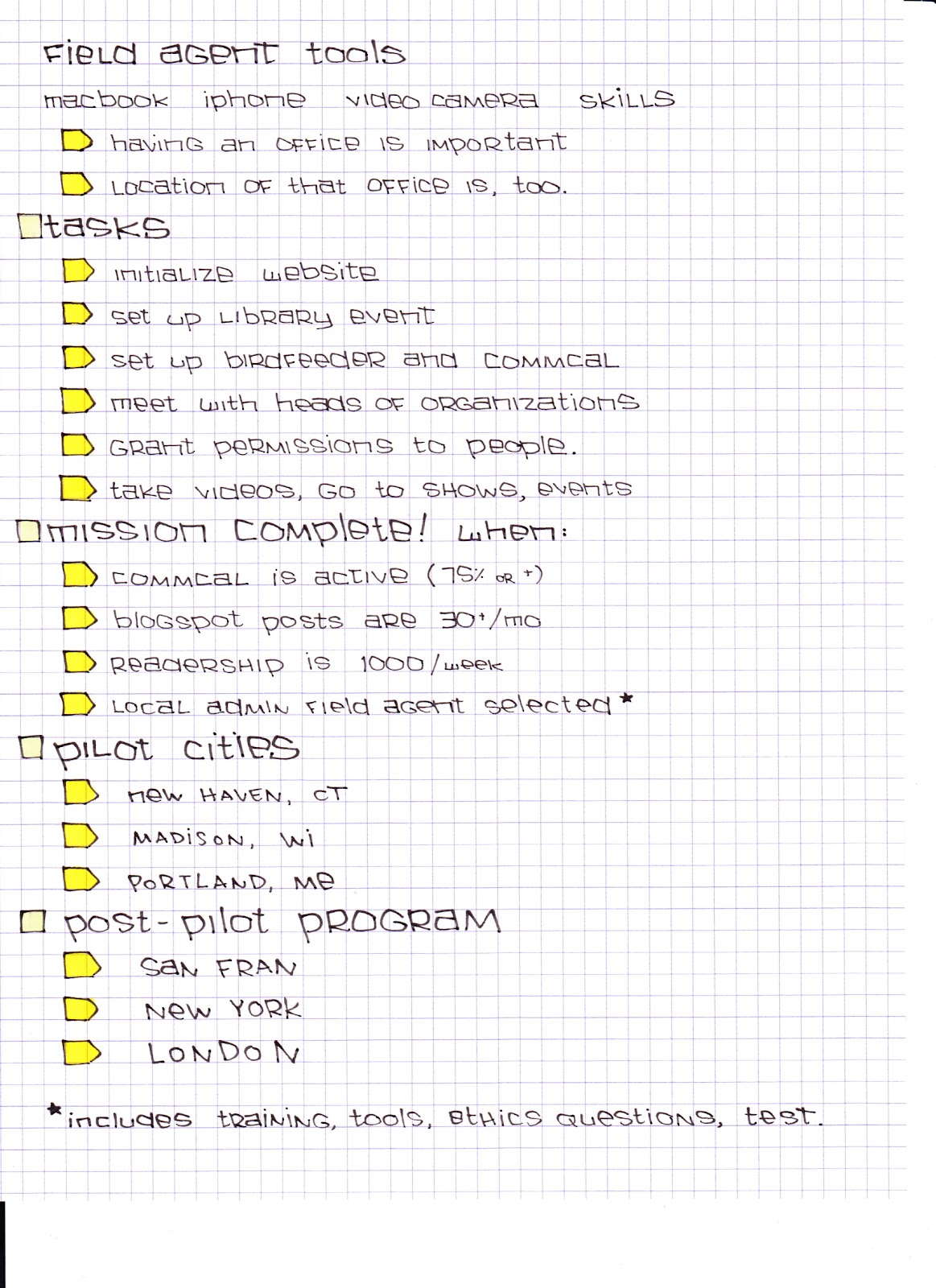
When I was 20, not many businesses had websites. I used to go into a business, grab a menu, and take it home. It had to be a place that I liked, such as a pizza restaurant, a coffee shop, or Gastronomique (
I'll explain that experience another time). If the menu didn't have a website on it, that meant that the business didn't have a website. It meant that all of that information they made public on that piece of paper wasn't online. So I would go through the menu, and categorize the types of information. If it were a restaurant, there would be breakfast, appetizers, soups, and so forth. I'd have to dichotomize this information in a way that I thought people could understand, and I learned more from the trials and errors of peoples' responses than I think I ever would have learned at a business school. I was pioneering the data myself.
What I found was that many of these websites were not accepted. I have a whole pile of them in a folder somewhere. Sometimes I got into hijinks. Occasionally there were antics. But as an entirity, it became clear that in order to make websites work for people, I would have to go out and show them what I could do. Once a website was complete, with candid photographs I took without anyone noticing, I returned to the restaurant with my 2002 Sony Vaio (yes, this took 2 years. I had to $ave). I would open the laptop on the counter to the manager, or whomever was accessible, and say "What do you think of your new website?"
They would give me food, and I would host their site. Every time I went in for a sandwich or a coffee, they'd ask, "Hey, can you take a picture?" or "Can you change the phrasing over here?" and I'd say, "sure."
They'd give me a sandwich.
Chronological Summary of Steps
I'd say this is remarkably possible, given the meteoric success of Google, historically. It also suggests a level of planning years and years in advance which most people aren't accustomed to. It assumes 100% success in every step of the way, but it's staged at points of achievement.
- Develop platform for a local government site.
- Implement that local government site.
- Develop secure login.
- Implement secure login feature.
Step 1. Lab Construction Of Google Municipal
Make a framework for a municipality to adopt, such like writers are offered blogs like this one. Keep in mind all of the facets of a local government. There's laws (many of which local laws are not published anywhere except in odd journals where these are cited for being odd or peculiar). There are local government officials and aldermen. And there
I suggest using New Haven, mainly for its size and reputation, such that the project gains significant and relevant attention. It's a small coastal town in New England, home of Yale University, and we have a crappy website. It's terrible. It gives you very little information at all. Check it out. We've had the same mayor since I was 12, and technology has changed immensely in that time, but you'd never know it from looking at their website. Ben Berkowitz, the fellow from SeeClickFix, made their website, and it works fine, but it has limitations, mainly that people don't really do very much to change the stuff that's up there. Much of the content stays stagnant, and it lacks uniformity.
So Step One really involves taking an area, thinking about what that area needs, in terms of access to information, and creating a customized web page specific for that municipality. Thus begins the process of constructing this one website, which does everything from alerts citizens when their street is being sweeped, to letting them know that there's a pitcher who's 5-0 with a 2.20 ERA at the local high school (and that there's a great game on friday).
Step 2. Implementation
The next step would be to roll out the new platform, which would present itself mainly as a challenge to government, who would essentially need to go through a phase where they were all required to retrain with a new system. This would probably be most easily implemented in a situation where the mayor was either myself or Ben, preferably Ben because I don't like wearing suits. But the mayor would really need to spearhead the new website, in order to make it work.
All department supervisors would have to pass a test, to determine whether they're mentally capable of understanding how to operate the new system. I'm not sure what that process would look like, but it would be smart to precede this before the plan actually goes into action. The mayor would have to operate under the platform that he came from a new political party known as the Green Party, and that his plan was to implement a better city website, which made local government more interactive (and thus participatory), more accessible (with better access to more information), and more transparent (less opportunity for duplicitous behavior amongst councilmen, for example, who claim to their constituency that they hold certain beliefs when their voting record tells a different story).
Starting this at the local government level makes it possible to see how feasible it would be to step up the role that Google plays in providing people with government.
Step 3. Secure Login Development
This is what could make Google participatory in the democratic process. By verifying a persons' identity, it makes it possible for that individual to perform functions which could only be done by them, whether it's accessing their home electrical system remotely to turn off a light or voting for their alderman.
How A Secure Login Affects Democracy
To compete with current voting practices, it has to be more secure than the ID required at a voting booth. First, you must physically be at the voting booth, which is a big deal for accountability. Somewhat. That can be over-ridden by allowing only one person with your SSN and matching security to vote in your name. Hopefully your SSN and security question ensures that person is
you.
This system could be tested first, and it's possible that voting could be conducted online, but people would really have to trust the source. Maybe during a transitional period, both methods were used for elections, perhaps in civic 'tests' that are conducted on a local level (fake elections involving Sesame Street Characters for TV shows, for example).
The other item worth considering is the aspect that people could vote on issues that their senators and congresspersons are voting on. Direct democracy is possible with the technology that is available. If proven to be as accurate for voting for elected officials as the archaic system, voting officially for other matters could also be given into the hands of the people, or anyone whom is interested in voting.
The obvious problem with this is to allow people to vote online requires them to have access to the internet in order to participate in Democracy. That's not impossible, but there might have to be a clause where people, even in the event that the entire government is automated online, might be able to go to an office and vote in person for their candidate. But this would be more of a permanent office, like an official Notary or other verified agency.
Protection Against Anti-Trust Retaliation
Let's say that the imaginary conglomerate "Monolith" catches on, and their people realize that this concept of Google Government actually infringes on their ability to control the purse strings of the US Congress. Their first actions to stifle this progress will be to litigate against Google and break it up into smaller organizations, or force them to compete with inferior clones. This is commonplace amongst Empires when they get threatened. Lord Vader would do the same. But you have to remember that these corporations are dependent on Google for their searchability and functions. Google has control over the searches, and as a private company, they have no obligation to provide people with fair search results. If they want to personally start blacklisting companies, making all search results involving their website completely invisible, and stop accepting advertisements from them, and take down any promotional videos they've placed on Youtube, they can do that. These companies are so dependent on Google, who have such an intricately well-organized system that keeps improving, that it's too big to fail. This argument might perpetuate for a while, and currently the Supreme Court would vote in favor of Monolith, as former Monolith Employees. So it's still a sensitive issue, and the movement would have to be championed by politicians, many who have risen to power by the success stories of their municipal Google websites, which have made their budgets more effective, given their schools access to cheaper yet better quality education, and have test scores and economies which prove with statistics to be more functional than towns without such a force to organize their information.
And, if the Government got its hands on Google, the results would be catastrophic to our personal freedoms, and I say this because everything the Government touches usually turns into something bad, as of lately, let's say ever since 322 took over the OSS, and once that took over control of government, the leadership really became lost. You might even say that we're more terrorized by the idea of terrorism than the actual perpetrators. It's arguable that these perpetrators are designed by the same people who act on the interest of protecting us from them, in an attempt to control us all because they're afraid of our own right to personal freedom. It causes society to become panicked as a whole, with more people on anti-psychotic drugs than any other type of prescription. The result, statistically, is a scenario which no one can really predict, but we all feel the possibility ominously looming on the horizon. I would rather see the Government collapse and fail than see it try to take on the responsibility of Google. Because in the event that the Government failed, we would be able to replace all of its poorly mismanaged bureaucracy with something only as efficient as Google could provide.